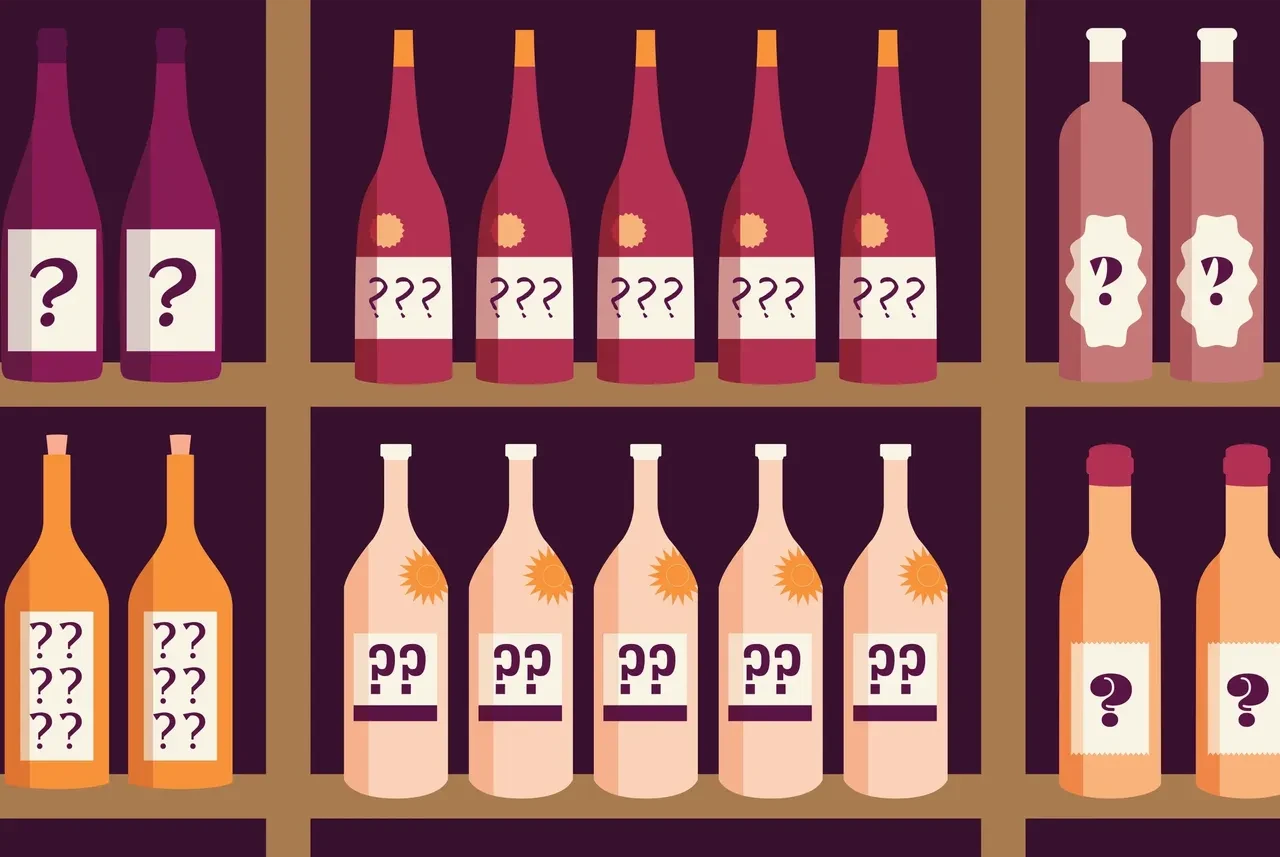
Have you ever stood in front of a wall of wine bottles, picked one up, looked at the label, and thought: "I have absolutely no idea what any of this means."
You're not alone.
Wine labels can seem confusing, especially when some bottles proudly display the grape variety while others seem to list only a region you've never heard of. The good news is that you don't need a wine degree to understand what's in your glass.
Once you know a few basics, reading a wine label becomes much easier, and can actually help you choose wines you'll enjoy.
Start with the Easy Part: The Grape
Many wines, especially those from the United States, Australia, New Zealand, and South America, prominently feature the grape variety on the label.
You'll often see names like:
- Cabernet Sauvignon
- Chardonnay
- Pinot Noir
- Sauvignon Blanc
- Malbec
These are known as New World wines, and the focus is often on the grape itself.
For example: California Chardonnay — even if you know nothing else, you immediately know you're buying a Chardonnay. Easy enough.
Old World Wines Play by Different Rules
This is where many people get confused.
Many European wines focus less on the grape and more on where the wine comes from. Instead of seeing the grape variety, you might see:
- Chablis
- Sancerre
- Rioja
- Chianti
- Barolo
If you're new to wine, your first thought might be: "That's nice... but what is it?"
The answer is that these are regions, not grape varieties.
For example:
- Chablis is Chardonnay from France
- Sancerre is usually Sauvignon Blanc from France
- Rioja is primarily Tempranillo from Spain
- Chianti is primarily Sangiovese from Italy
Old World wine regions assume consumers know the grapes associated with the area.
Why Do Old World Wines Focus on Place?
Because many traditional European wine regions place tremendous importance on terroir.
Terroir refers to the unique combination of soil, climate, geography, elevation, and local traditions. The belief is that where a wine is grown is just as important as the grape itself.
In other words, two Chardonnays grown in different places may taste very different because of the influence of terroir. For many Old World producers, the region is the star of the show.
Don't Ignore the Vintage
The vintage is simply the year the grapes were harvested. For example: 2023 Sauvignon Blanc — the number tells you when the grapes were grown, not when the wine was bottled.
For everyday wine purchases, the vintage usually isn't something to stress over, but it can provide useful information about the wine's age and growing conditions.
Alcohol Can Tell You Something Too
Most labels include the alcohol percentage. Generally speaking:
- Lower alcohol (11–12.5%) often means lighter-bodied wines
- Higher alcohol (14%+) often means fuller-bodied wines
It's not a perfect rule, but it can help set expectations.
What About Those Shelf Talkers?
Those little cards hanging from the shelf can be helpful, but don't rely on the score alone.
A 95-point wine may be an excellent example of its style, but that doesn't necessarily mean it's a style you'll enjoy. Instead, look at the tasting notes — fruity, crisp, rich, oaky, floral. Those descriptions can tell you far more about whether the wine fits your personal taste.
Remember: the goal isn't to buy the "best" wine, it's to buy a wine you'll actually enjoy drinking.
Want to Learn More?
One of my most popular classes is Wine 101, where we take the mystery out of wine labels and wine terminology.
In the class, we'll cover:
- Brief history of wine
- Old World vs. New World wines
- How to read wine labels
- Why terroir matters
- Major wine regions around the world
- How to choose wine with confidence
By the end, you'll spend less time staring at labels and more time enjoying what's inside the bottle.
The Bottom Line
Wine labels aren't designed to intimidate you — even though they sometimes feel that way.
Once you understand the grape, the region, the vintage, and the role of terroir, you'll be able to navigate the wine aisle with far more confidence.
And who knows? You might even impress a friend or two the next time you're asked to pick the wine.
Cheers!
Want to learn more in person?
Linda brings this kind of wine education directly to your home. Gather your friends and book a private tasting experience.
Book a Wine Experience